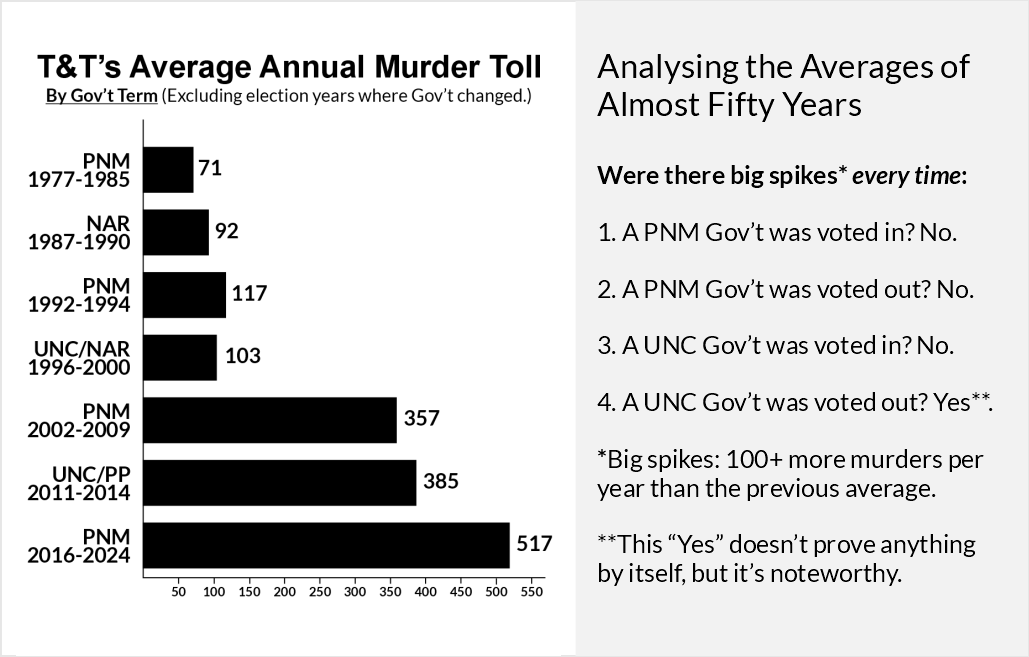
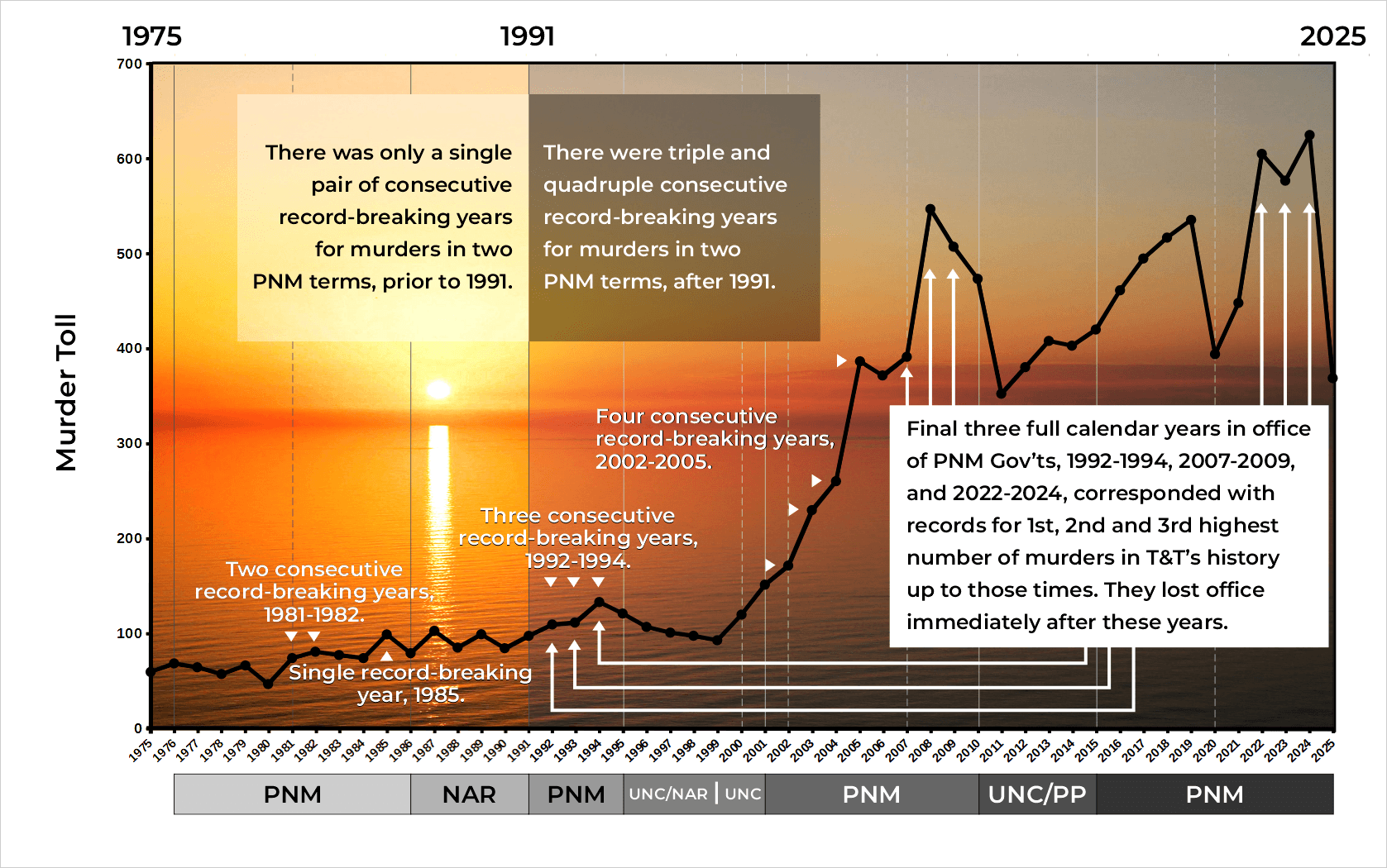
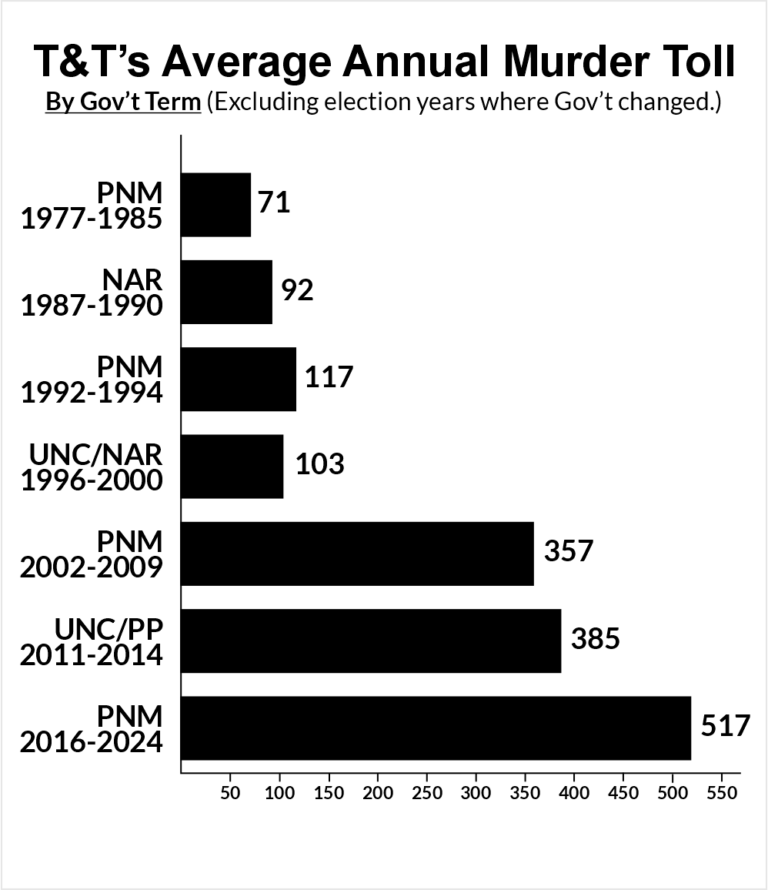
Based on CSO/TTPS data, T&T's average annual murder toll experienced two unusual spikes in the past 50 years (over 100 more murders per year than the average during the previous Government's term). What does it mean that both spikes occurred only after a certain political party was voted out of Gov't? Not whenever a certain party was voted in, only after a certain party was voted out, that was the only consistent factor in having huge spikes, over that five-decade span.
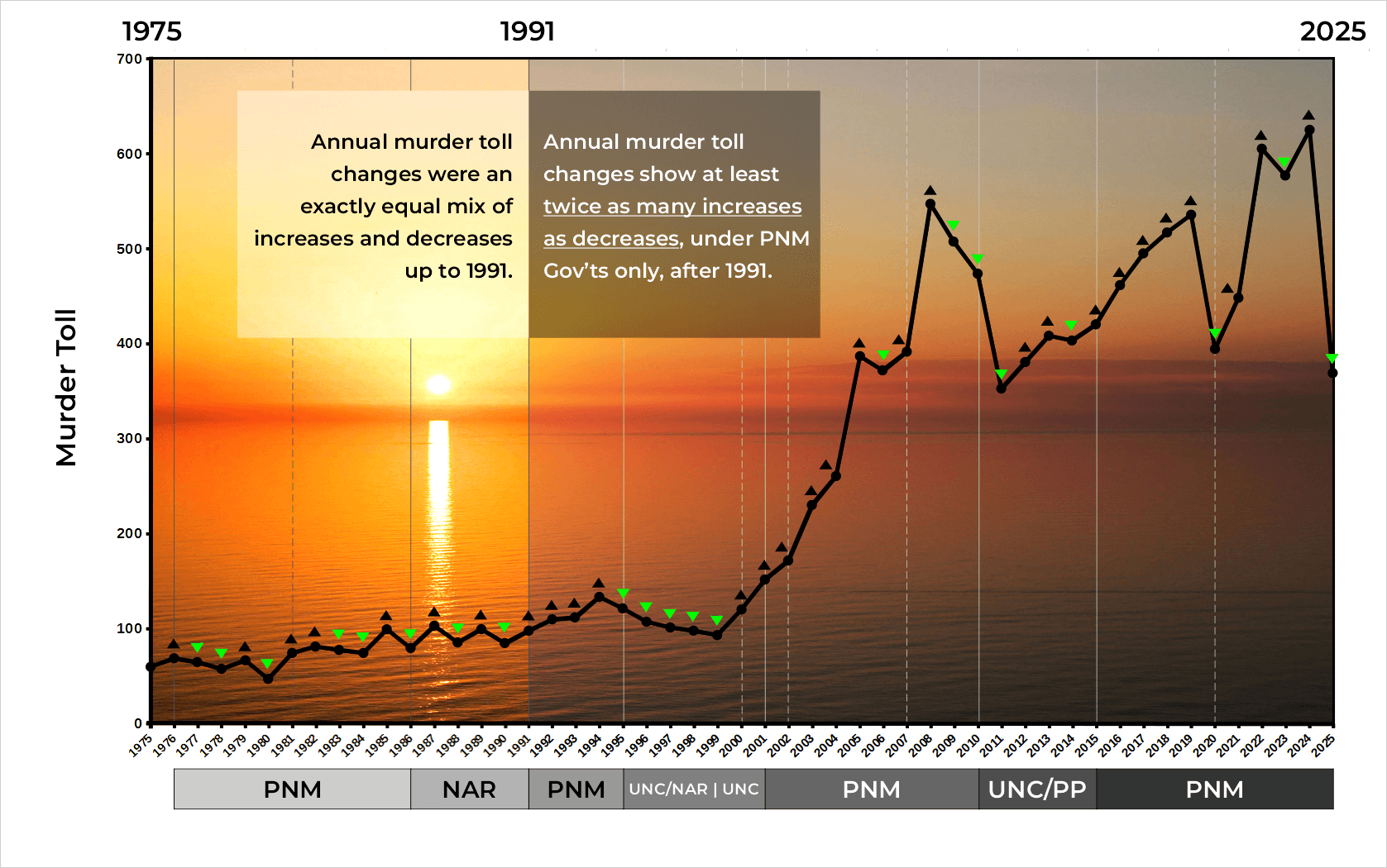
After the General Elections of 1991, the annual murder toll record was broken in each of the next three years, 1992-1994. This was then the largest number of murders ever recorded in a three-year period, and the first time there were three consecutive annual tolls over 100, according to available stats. The murder toll declined noticeably after the change in Gov't, from 1996-1999. It climbed again in 2000, and then began another, longer, bloodier streak. From 2001, when a UNC Gov't collapsed, until 2008, the year after the second consecutive PNM GE victory, the record was broken 7 times in 8 years.
According to the CSO, 60 murders were recorded in T&T in 1975. Twenty years later twice as many, 121, were recorded for all of 1995. Thirteen years later, in 2008, there were over four-and-a-half times as many murders as occurred in 1995, 547 killed. After the November 6th General Elections in 1995, a UNC/NAR coalition Government took the reins of power. Prior to this however, a University of the West Indies (UWI) Working Group in Caribbean Criminology had been established, and this team of local and international experts formulated a National Action Plan Against Crime* for T&T. This Plan was formally presented to the then Prime Minister in January 1996 and, in expressing gratitude for their efforts, he remarked that "crime is the number one problem in this country." The PM also pledged the sum of TT$5 million needed for the Plan's implementation. Almost 24 years later, the Working Group's then Chairman revealed this tragic irony about the PM's pledge: "Mysteriously, that promise never materialised."
At the formal presentation, one member of the Working Group photographed greeting the PM with a handshake was Dana Seetahal, UWI Law Lecturer and Assistant Solicitor General. The Plan included multi-level interventions intended to disrupt the cycle of at-risk youth just barely graduating from school into criminality and eventual incarceration, or a worse fate. Just three months before that handshake, in October 1995, a boy named Rajaee Ali turned 10. Within twenty years he and others would be charged with Ms. Seetahal's murder. And in another tragically ironic twist, it would be alleged that taxpayer money was used to pay for her assassination, under another UNC coalition Government (see 2015 below).
*National Action Plan Against Crime: Text extracted from a 1996 Trinidad Express Newspapers publication, in the national interest. No copyright infringement intended. Original documents are stored at the UWI Campus in St. Augustine (also see this Google search result, or this Bing search result, in case that UWI page becomes unavailable). Special care was taken to faithfully transcribe the relevant parts of the document, any errors are regretted.
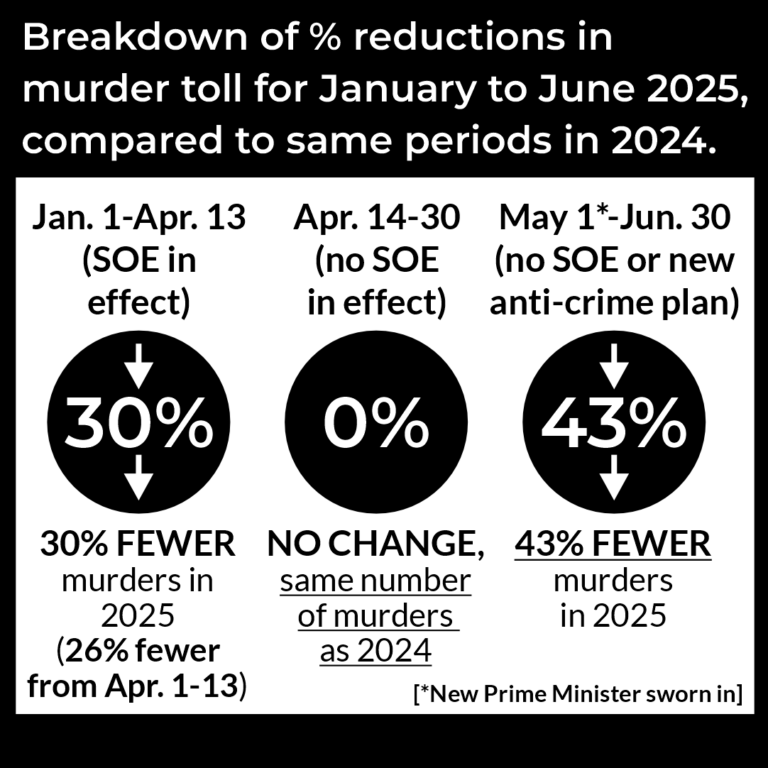
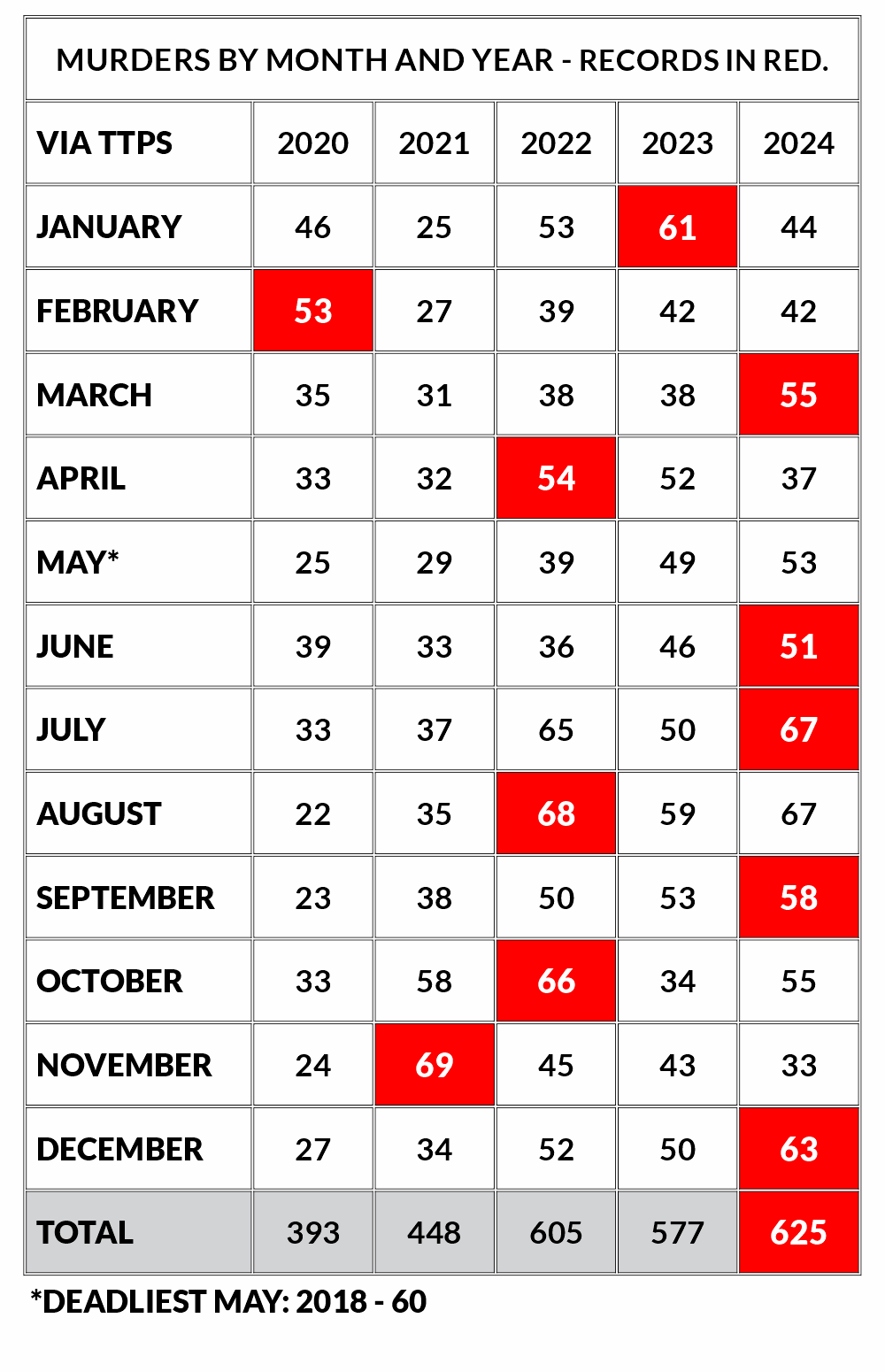
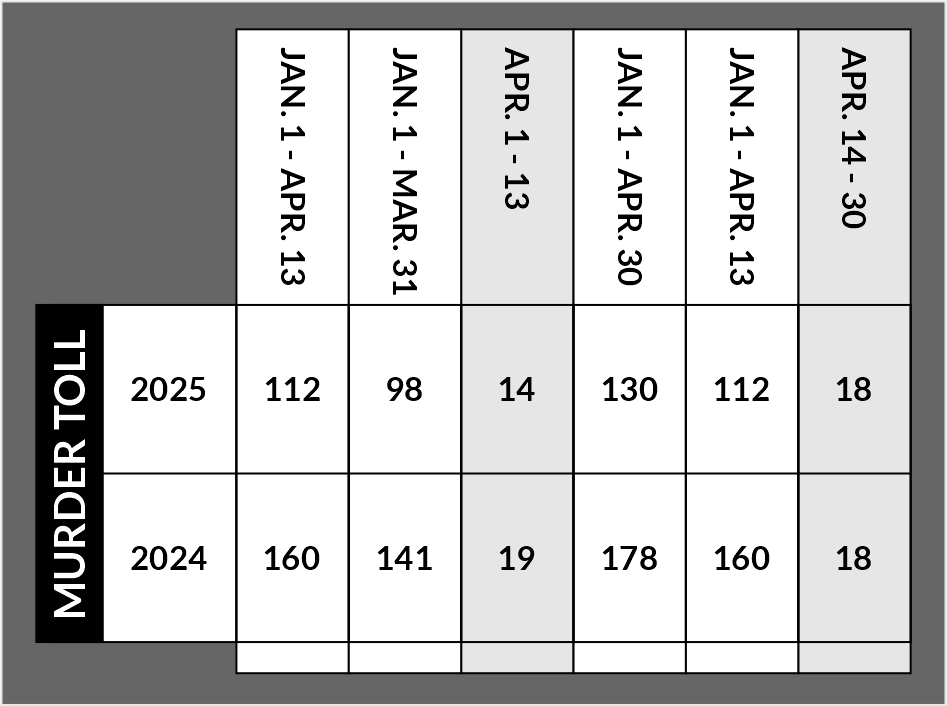
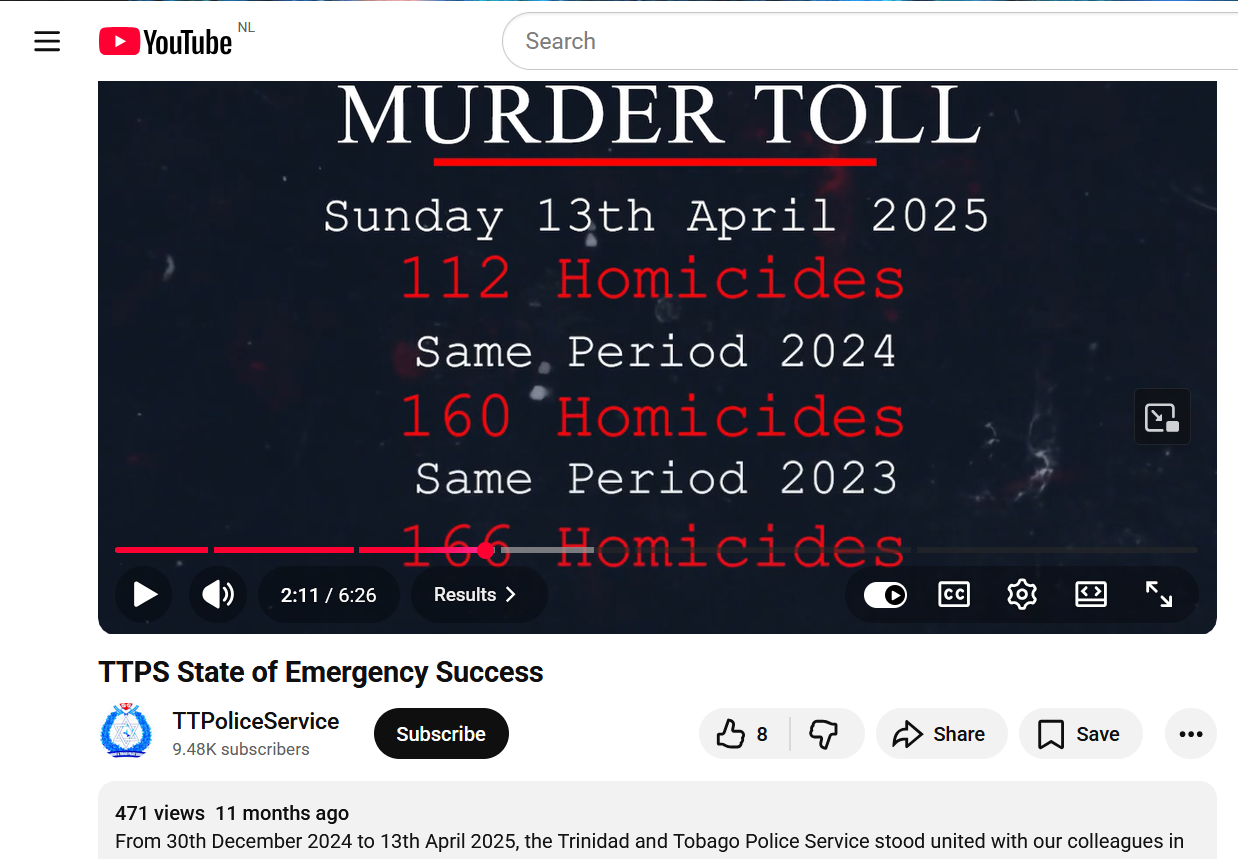
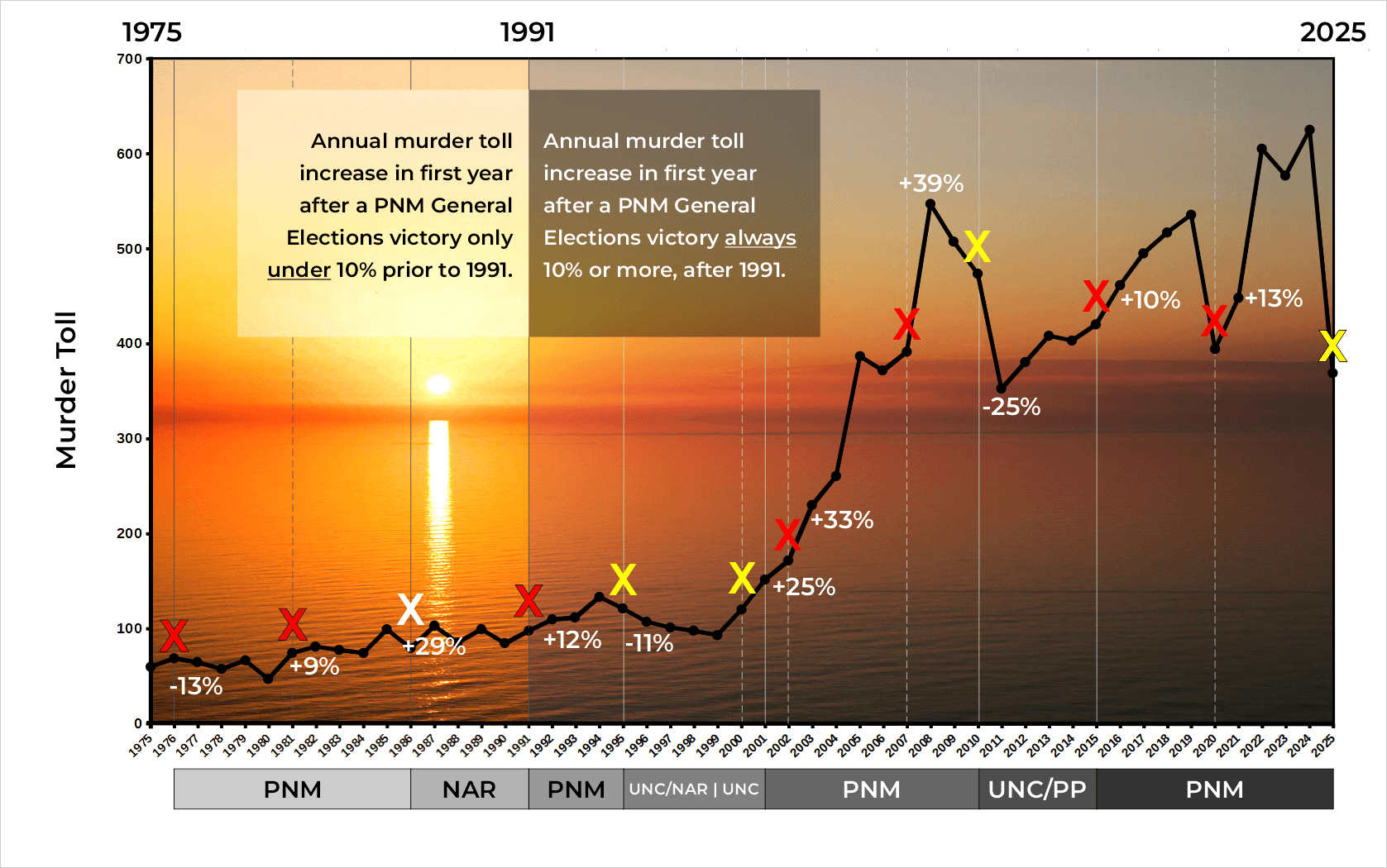
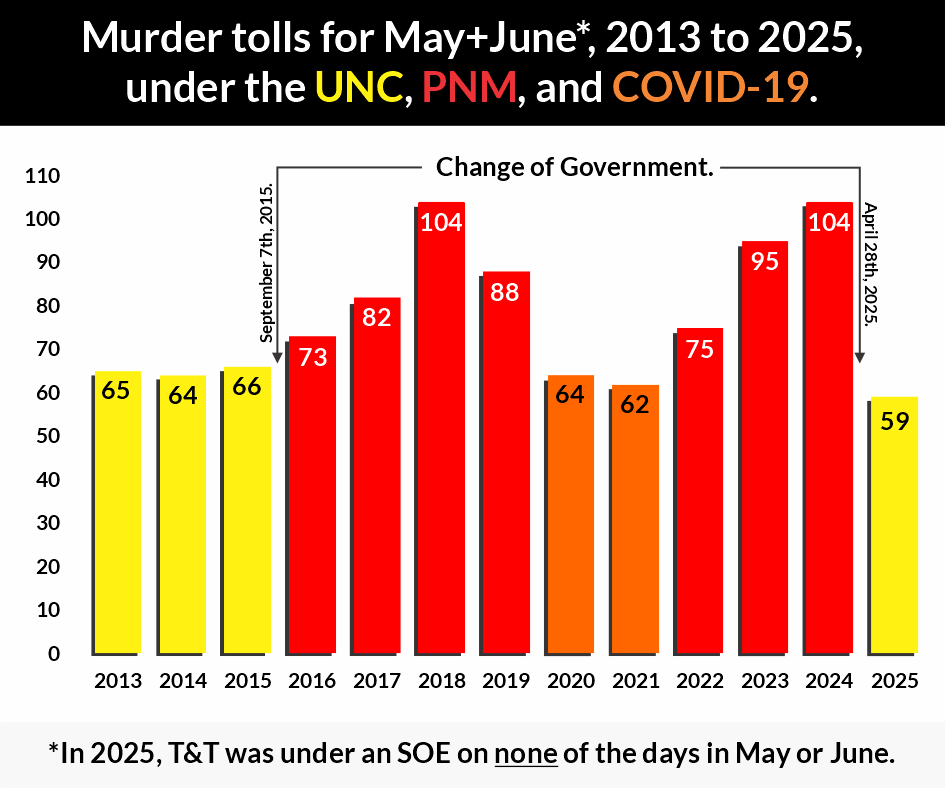
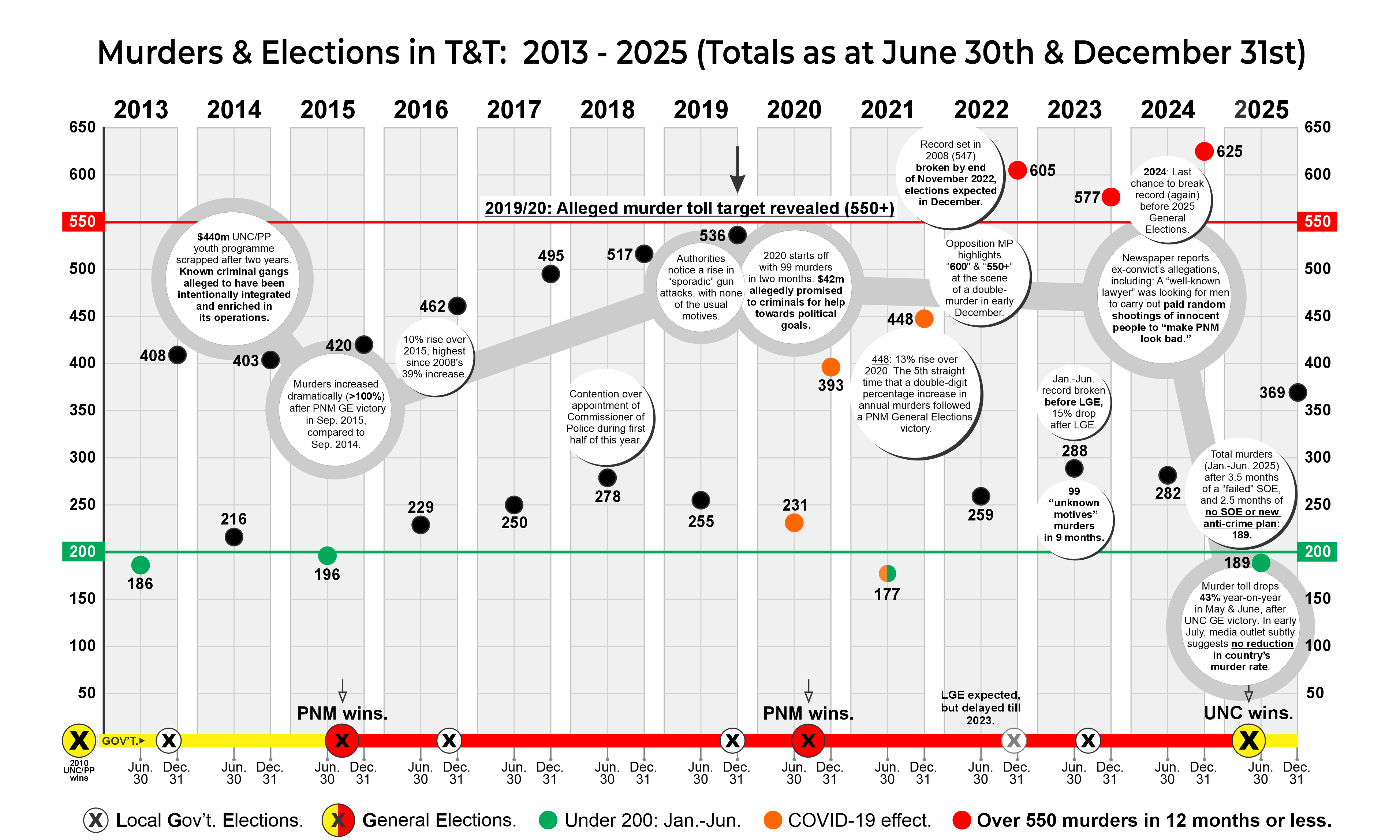
In May 2025, the first month after the General Elections, there were 43% fewer murders than occurred in May 2024. This contrasts sharply with the over 100% more murders seen in September 2015 compared to September 2014, after the General Elections that month. Neither new Government would have had enough time to put any significant new policies in place to affect crime one way or another. Were the dramatic changes in murders immediately after the elections in 2015 and 2025 just coincidences? That seems a little too convenient. So please consider the facts and allegations that follow, especially what happened in late 2019; allegations in the Interim Report of the Joint Select Committee on National Security - Fifth Session (2019/2020) of the 11th Parliament, 137 pgs. long (or read an AI-generated summary, 4 pgs., errors possible); and the statistics of 2022-2025.